Friday, 29 January 2016

Underrated Bond: Women

Ladies first.

Tracy Bond, On Her Majesty's Secret Service
She's popular with fans, but the only Mrs. Bond is still frustratingly unknown to the broader public.

Before Vesper Lynd, Tracy was the One. The only Mrs. Bond, the only one to affect Bond's character in a meaningful way, and the only woman whose death was worth a damn in the franchise.

The daughter of a crime kingpin, Tracy had no illusions about her father and Bond's backgrounds, but also no hang ups. When she runs into an exhausted, disarmed Bond on the run from Blofeld's goons, she does not hesitate to get him out of trouble. Cue a magnificent car chase in which Tracy totals the opposition's vehicles and 007 stops seeing her as just another fling.

A loose cannon with whip smarts who had no problem throwing down when things got ugly, Tracy is the kind of female protagonist most action films can only dream of.

Natalya Simonova, GoldenEye
The first Bond Girl of the 90s, and the best of the Brosnan era if one takes Elektra King out of the equation.

Natalya has skills that Bond does not, and is a quick study on the skills he has. In a refreshing break with convention, she is not blind to the moral ambiguities of Bond's job. She does not see him as a hero, and questions his detached approach to life.

She does not influence his character as meaningfully as Tracy or Vesper, but by either the standards of Bond Girls or just as a female action lead, Natalya Simonova is more substantial as a character than you would expect from either archetype.

Elektra King, The World Is Not Enough
It felt odd putting Elektra on this list, considering [SPOILERS] she turns out to be the Big Bad.

The daughter of one of M's (Judi Dench) friends, she was kidnapped and ransomed by terrorist leader Renard (Robert Carlyle). When her father, at M's urging, refused to pay the ransom, Elektra took matters into her own hands to escape.

Over the course of the movie, Bond realises that Elektra had seduced Renard and is now using him to perpetrate a campaign of vengeance against her father and M.

Complicated, manipulative, psychotic and completely self-assured, Elektra is the kind of problematic character that the Bond franchise needs more of. Too psychologically complex to fit any of the series's female archetypes, she stands apart as one of the series's too few experiments with strong female characters.

Easily one of the most well rounded and original spins on the Bond Girl and Villain archetypes in the series, Elektra deserves more recognition for having understandable motivations. If the movie around her was better, her status would be assured as one of the best latter-day antagonists in the franchise. 

Wednesday, 27 January 2016

The Meyer Files #8: Faster Pussycat Kill! Kill! (1965)

'I don't beat clocks, just people!' - Varla 

If you are going to watch one Meyer movie -- make it this one.

This is the one where everything works: the camera work, the editing, the script and most importantly, the performances.

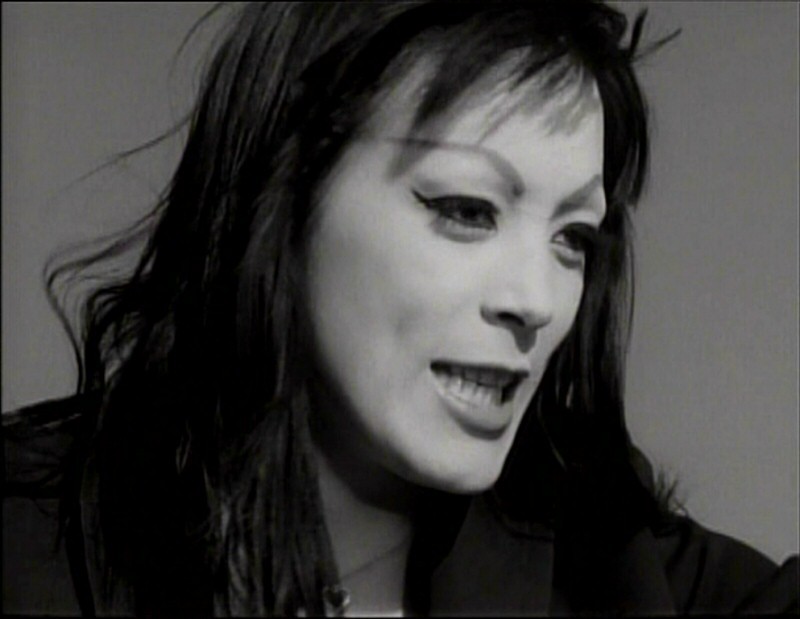
And the one thing responsible for pushing it to the next level is its star. Because if you want to talk about Faster, Pussycat! Kill! Kill! you are really talking about Tura Satana.

Satana's performance as Varla takes the Meyer superwoman and fills out this archetype with something his previous leading ladies could not provide: rage. Satana had had a very hard life involving abuse, racism and alcoholism, but she had beaten them all by the time Meyer came calling, and that sense of self-worth pulses through Varla like an electrical current.

For a non-actress with little previous experience, Satana is a revelation. She gives Varla a don't-give-a-fuck attitude and a pitch black sense of humour which is like nothing else in the Meyer canon, and her experience with acrobatics and martial arts gives her a physical presence that is hard to forget, especially when she takes Ray Barlow's irate teenager to pound town.

Apart from the action scenes, Satana proves to be a fine actress. Whether it is seducing the hapless Kirk or putting down a leery gas station attendant who oogles her cleavage while blathering about finding the new world ('You won't find it down there, Columbus!'), Satana is a born star. Sadly, outside of Pussycat, roles were few and far between for the former stripper and she left the industry to become a nurse. Meyer always regretted not putting her in another movie, and it is a sad post-script to her work in Pussycat that she did not get more out of it.

Whereas Motorpsycho felt like a ripoff of The Wild One, Pussycat is its own beast. Three murderous strippers go out into the desert to have fun and see what trouble they can get up to. The trouble they find is a pair of sickeningly earnest teenagers. Unimpressed with the couple, Varla challenges them to a road race. After cheating to win, she starts a fight with the boyfriend (Barlow) and kills him with her bare hands.

I know this picture contradicts what I just said but it looks really cool

Taking his traumatised girlfriend as a hostage, the trio hide out on the decrepit estate of the Old Man (Stuart Lancaster), a wheelchair-bound cripple and his two sons, nice guy Kirk (Paul Trinka) and the musclebound Vegetable (Dennis Busch), a man with the body of a Greek statue and the mind of a child.

Figuring that the Old Man must be loaded, Varla decides to stick around and find out where the money is. Meanwhile, Billie (Lori Williams), the most wild of the trio, is more interested in seducing the Vegetable while Rosa (Haji), Varla's loyal girlfriend, is anxious to move on.

The longer Varla and her cohorts stick around, it becomes clear that the Old Man and the Vegetable are not as harmless as they appear...

What can you say about this movie which hasn't already been said?

The photography and editing are top-notch, and the supporting cast of familiar faces were never better.
The Old Man and the Vegetable

Stuart Lancaster was never better than here as the Old Man, filled with venom and regret for how his life has turned out. His best moment comes when he hears the sound of the train which is responsible for crippling him:

'Sound your warning. Send your message. Huff and puff and belch your smoke! And kill! And maim! And run off unpunished!'

The other members of the girl gang are able support for Satana's villainess. Haji is surprisingly empathetic as she tries and fails to curb her lover's monstrous ambitions, while Lori Williams gives Billie a sense of anarchic energy which is hard to resist.

Special credit has to go to Susan Bernard as the terrified hostage.


According to Jimmy McDonough, the terror was not fake. Bernard was a Hollywood product who got on everyone's nerves so much with her airs and poor acting that Meyer gave Satana the go-ahead to scare the living daylights out of her. Satana and her two co-stars spent the shoot stalking Bernard and keeping her on her toes. Since the film was shot mostly in chronological order, the film acts as a document of Bernard's growing discomfort, as her performance goes from wooden to sweaty, shivering agitation. Judging by Bernard's nervy, anxious performance, Satana's scare campaign was a major success.

Faster, Pussycat! Kill! Kill! (isn't that the best title ever?) is the movie that ensured Russ Meyer's immortality. Long after he had finished making pictures, his editing style had been usurped by MTV, and relaxed censorship put his work out of date, Pussycat was the movie that refused to die. Adopted by everyone from punk rockers to the LGBT community (John Waters calls it the best movie that WILL EVER be made), Pussycat's bizarre, compassionate look at its messed up characters found an audience Meyer never thought of. The story of three empowered women taking life by the balls was revolutionary in 1966 (which explains why it failed), and only became more popular as times changed and views on gender and sexuality evolved.

Meyer would keep making good movies, but nothing to match this, his one true masterpiece.


Russ Meyer will return with Mondo Topless!

For previous entries...


The Meyer Files #1: The Immoral Mr. Teas (1959)


Tuesday, 26 January 2016

Body Heat: Neo-noir at its finest


Almost 40 years after its initial release, Laurence Kasdan's directorial debut remains one of the greatest neo-noirs of all time. A superlative update of the Double Indemnity template, the thing which separates Body Heat from most of the neo-noirs which followed it is simple: depth.

Most neo-noirs of the 80s and 90s took on the visuals and archetypes, but Body Heat has the intelligence to recognise that what made the classic noir great was not their visuals or the conventions (which are not uniform to all noir), but the underlying theme of characters falling into an abyss of their own making. 

The characters in Body Heat don't feel like genre mannequins being pushed through the motions, they feel like desperate people with all-too-human weaknesses for money, power and sex. The reason Body Heat works is down to the superlative work of its lead character.


While much has been written about his co-star, William Hurt is the sweaty, beating heart of the movie. If Kathleen Turner is the perfect femme fatale, he is the perfect fall guy -- he is flawed, not particularly likeable and he makes mistakes. All the great noir of old were based around a single isolated, desperate person engineering their own downfall, and Body Heat stands proudly in that tradition.

Ned Racine (Hurt) is not smarter than his forebears, but he is more self-aware. He even tells Mattie Walker (Turner) that he is not smart -- he's just a lazy, corrupt lawyer who is more interested in sexing his way through town than doing his job properly or living a semblance of an adult life.

To quote Judi Dench in Casino Royale,  'Arrogance and self awareness rarely go hand in hand.' Ned may be aware of his short-comings, but that is only his way of deflecting criticism -- just because he knows he's an asshole does not mean he is going to change. Like a classic fall guy, Racine's own weakness causes his downfall. Kasdan and Hurt just grease the wheels so that his race to Hell goes faster.

Kathleen Turner is the very definition of a femme fatale -- she is certainly one of the most duplicitous and successful of the breed. With Mattie Walker, Laurence Kasdan created a new archetype -- the femme fatale who wins. There would be no Basic Instinct or Last Seduction without Walker to lead the way.

A few words about the supporting players.


Special kudos should be given to Richard Crenna as Walker's unlucky husband. Probably most well known for his hammy turns as Rambo's confidant Colonel Trainman, Crenna has never seemed so alive onscreen before. Perhaps energised by the chance to dig into a truly great role, he injects Walker with a venom and malevolence that almost makes you forgive Mattie and Ned for what they are about to do.


Ted Danson and J. A. Preston form a terrific double act as Ned's friends -- they see that their friend is slipping into a trap and cannot do anything to dissuade him.

The rest of the filmmakers involved in Body Heat perform above and beyond the call of duty. Richard H. Kline's photography oozes humidity and John Barry's score is one of his finest, sounding both classic and yet timeless. It could be a contender for the best score for a film noir ever.

Final thoughts: Body Heat is a great movie. Either as a film in its own right, or as an example of neo-noir, it is first class.

Monday, 25 January 2016

Johnny Gill: Album review

Thought I would take a break from the moving pictures and review something completely (okay, relatively) different.


Johnny Gill is the second self-titled album from Johnny Gill, a Motown artist who first appeared on the scene in the mid-80s as a teen pop star. The star part took awhile as he slogged through a couple of bubblegum albums which failed to spark. Fortune smiled when Bobby Brown left New Edition to begin his solo career.

After Brown's departure, Gill was tapped to be his replacement. The album he appeared on, Heart Break, happened to be the group's breakthrough as an adult act. Benefitting from the magic touch of producers Jimmy Jam and Terry Lewis, the album was a massive hit. 

In 1990, the various members decided to try other projects: Ralph Tresvant released a solo album, scoring a hit with the fine ballad 'Sensitivity'. The other three members formed a power trio, Bell Biv DeVoe, which scaled the charts with their new jack anthem 'Poison'.  However, the biggest success, from a critical and commercial standpoint, was Gill's effort, an effortless mix of scintillating ballads and energetic dance numbers.

A tag team effort from Jam-Lewis and Babyface and LA Reid, Johnny Gill remains a sterling piece of work -- a testament to what can happen when you top load a project with talent. 

I have had this album for years, and it continues to amaze me how many great tracks are on it. The diversity of styles alone gives it a depth you normally do not get with a pop record.

Since it's the early 90s, you get your new jack dose with 'Rub You The Right Way' and 'Fairweather Friend'. And for the romantic types, you get the timeless 'My, My, My' and 'Wrap My Body Tight'. Sure, the videos are collection of RnB cliches, and some of the production anchors it to the past, but the songs are great. With a few aural adjustments, tracks like these could stand up to most contemporary offerings of a similar kind. 

Johnny Gill would continue to put out records, both solo and as a part of a re-formed New Edition, but he has arguably never bettered this. Give it a listen.


Sunday, 24 January 2016

Scorsese's next?: Eric Larsson's 'Devil in the White City'


It was recently announced that Martin Scorsese will be shepherding the adaptation of this book to the screen. A more perfect pairing I could not think of.

Larsson's book is an epic tale from the white heat of America's history: the birth of the industry and progress that would define the United States in the next century interwoven with its opposite -- the motiveless malevolence and mayhem of America's first real serial killer. The decision to combine the crimes of HH Holmes with Daniel Burnham's quest to bring the 1893 Columbian exposition to life turns the story into a by turns terrifying and ironic commentary on the darkness underpinning the myth of American prosperity.

Both are stories of control, power and loss; both are ultimately marked by the other. And like the white city itself, most of the participants are soon gone -- Holmes via the gallows; the movers and shakers by infirmity, age and, in one unfortunate case, circumstance (a famous shipping disaster).

I do not want to go into too much detail about what happens in the book -- Larson's approach is so intricate and interwoven that it would do no justice to try and boil the story down. Regardless of whether this adaptation comes to pass, track down a copy of this book. It is a truly great piece of historical drama. If this project does come to pass, it could well be Scorsese's next masterpiece. 

Saturday, 23 January 2016

Hitch’s British Thrillers: In Order of Quality

Before he went to Hollywood, Alfred Hitchcock made his name with a series of thrillers which allowed him to develop the techniques, conventions and themes that would continue to inform his work for the rest of his career.  

6) Sabotage (1936)

One of the darkest movies Hitchcock ever made, and probably, aside from Frenzy, his most cynical. Based on Joseph Conrad's novel The Secret Agent, it is the story of Verloc (Oskar Homolka), a theatre owner and his wife (Sylvia Sidney). Verloc is under suspicion as a foreign agent -- his theatre never shows a profit, yet he is still able to live a fairly comfortable life. Masquerading as a nearby greengrocer, Ted Spencer (John Loder), a British police man, tries to convince Mrs. Verloc that her husband is not who he seems... 

Though the story was softened considerably from the original source material, it is still grim stuff. The movie's reputation hinges on its penultimate sequence -- with the police watching his every move, Verloc convinces his wife's younger brother Steve (Desmond Tester) to take a package (containing a bomb) into the city. This final set piece is nerve-shredding, as Steve dawdles and gets delayed or distracted by various people and events. You wait in hope that some kind of reprieve is on the way, but no. In this case, Hitch does not let the viewer off the hook. 

Performances from the cast are solid all around, but while the final set piece is fantastic, the film leading up to it lacks drive. Outside of the bomb sequence, there is little to grip onto emotionally. An interesting picture that does not quite work as well as it should, but still worth a look.

5) Secret Agent (1936)

Secret Agent is filled with strong individual performances and some terrific set pieces, but the movie is let down considerably by a surprisingly dour central performance from John Gielgud. Gielgud did not become involved in cinema until his 60s, and this film certainly highlights his inexperience in front of the camera. Even future TV fixture Robert Young as the token American outshines Gielgud. Peter Lorre steals the movie as the insane 'General',  Gielgud's fellow agent who spends all his time literally chasing any woman that takes his fancy. Madeline Carroll makes a welcome return after her performance in The 39 Steps. She is her usual sparky self, but the chemistry with Gielgud is almost non-existent. The movie is not exactly bad, but the void of its leading man is too crippling to make it consistently enjoyable. 

4) Young and Innocent (US Title: The Girl Was Young, 1937)

A personal favourite, this one. Considerably lighter than the other films he made during this era, it is more of a romp than his spy thrillers. If it is remembered at all, Young and Innocent is famous for an extended long take from one end of a ballroom to an extreme close up of the real killer's twitching eyes. The story is a simple variation on the 'man on the run' scenario: a young man attempts to clear his name of murder, and becomes involved with the daughter of the police inspector on his tail. 

More of a romance than a thriller, Young and Innocent benefits from an appealing pair of lovers in Nova Pilbeam and Derrick De Marney, and some deft comic touches from Hitch to leaven the suspense of De Marney's plight. Good teatime viewing.

3) The Man Who Knew Too Much (1934)

The beginning of Hitch’s ascent to the big time. The Lodger and Blackmail had given him some heat, but after The Man Who Knew Too Much, Hitch found his groove in a series of thrillers that would lead to his Hollywood classics. Of the capable cast, Peter Lorre is the stand out as the scarred villain. He lays down the blue print for Hitch's sophisticated heavies -- from Claude Rains in Notorious through Ray Milland in Dial M For Murder and culminating James Mason's suave spymaster in North by Northwest. Filled with iconic set pieces -- the church meeting; the opera sequence; the final shootout with police -- The Man Who Knew Too Much is terrific entertainment. Clearly, Hitch knew he was on to a good thing -- it's the only film of his own that he remade.

2) The Lady Vanishes (1938)

Honestly, this one is interchangeable with Number One, it’s that good. Set on a train filled with a collection of eccentric and sinister passengers, The Lady Vanishes is basically a locked room mystery. It is also one of the best comic thrillers Hitch ever made, standing toe-to-toe with his more famous films. 

Leading lady Margaret Lockwood is more famous for the series of conniving villainesses she played in the Gainsborough melodramas of the 40s (such as The Wicked Lady), and adds a good dose of brass to her role as an over-aged debutante. Michael Redgrave is a terrific romantic foil, and his banter with Lockwood is delightful. 

The story is filled with twists and sudden reversals, and the various comic subplots of the other passengers provide a vivid and exciting backdrop to the main action. One of the most fun of all of Hitch's movies, and well worth a look.

1) The 39 Steps (1935)

I thought long and hard about this one, but honestly this is the only film that feels like it fits comfortably in the top slot. Hitch's first real attempt at the 'man on the run' plot he'd dust off for films like Saboteur and his masterpiece North by Northwest, The 39 Steps remains one of his great films and the pinnacle of his British period. 

John Hannay, a Canadian currently residing in London, finds himself wrongly accused of murder and end sup on the run through the Scottish Highlands. Pursued by police, he also has to contend with the  sinister organisation behind his misfortune. With the reluctant aid of Pamela (Madeline Carroll), a woman who finds herself literally chained to the fugitive, Hannay tries to uncover the secret of the '39 Steps'...

Everything about this movie works. Robert Donat and Madeline Carroll are a terrific screen couple, the plot is a string of increasingly exciting set pieces and the whole thing is leavened by a strong dose of English wit (the scene where Hannay delays capture by hijacking a political rally is laugh-out-loud funny).

Ripped off by everyone from The Fugitive to James Bond, The 39 Steps  remains a timeless piece of entertainment. 

Friday, 22 January 2016

Jackie Brown: The Forgotten Tarantino


In advance of the NZ  release of Quentin Tarantino's The Hateful 8, the Academy is playing a season of his previous films, including Jackie Brown, which I have never seen.

Jackie Brown is the forgotten child of Tarantino's filmography. Released after the one-two punch of Reservoir Dogs and Pulp Fiction, Jackie Brown was considered a disappointment, a feeling increased when Tarantino took a 6 year hiatus from filmmaking.

Based on the novel Rum Punch by Elmore Leonard, Jackie Brown tells the story of a middle-aged air hostess named Jackie Brown (Pam Grier). She's on the verge of retirement, and makes a few extra bucks smuggling currency for an LA gangster, Ordell (Samuel L. Jackson). After she gets caught with the money (and a small amount of drugs that Ordell had secretly stashed with the cash), she is arrested. Ordell arranges bail and sends veteran bail bondsman Max (Robert Forster) to pick her up. And then things get complicated...

So, how does Jackie Brown stack up?

Before the movie began, a short clip was played from Tarantino himself basically introducing the movie (kudos to the Academy staff for getting him to do that). He called Jackie Brown a 'hangout' movie, a movie where you could just chill out and get a feel for the characters. That's a pretty good encapsulation of the movie. It's not as propulsive or tightly wound as his previous movies, nor as crowd-pleasing as the ones which succeed it.

And yet, taken on its own breezy terms, Jackie Brown has a lot to offer. It's a movie more interested in its ensemble than the criminal caper, and spends more time 'hanging out' with the characters than worrying about the plot. The ensemble in Jackie Brown may be the most likeable group of characters Tarantino ever put onscreen.


Before its release, this movie was seen as a career comeback for Pam Grier, a major star of the blaxploitation era from such films as Coffy and Foxy Brown. Tarantino made several changes to the book, including changing the race of the heroine and re-titled the film to reflect the connection with Grier's past work. These links back to Grier's past dovetail nicely with her character -- Jackie used to a flight attendant on a major airline but after a brush with the law, she is stuck on a low-rent route between California and Mexico. At 44, she is not in a place to stage a career comeback -- like Grier, she has been counted out.

Grier's performance as Jackie cannot help but bring back memories of her ass-kicking in the 70s. The scene where she turns the tables on Ordell (Samuel L. Jackson) when he comes to her house to kill her is vintage Grier: smart, cool under pressure and packing heat. Tarantino puts her squarely in the centre of this story, and Grier carries it to the finish line. Still charismatic and sexy as hell,  Grier infuses Jackie with an intertextual life that gives the character a real sense of weight and history.

The same can be said of her co-star.


In the mid 90s, Robert Forster was in a similar slump to Grier. He was a veteran character actor who had never quite had that one role that could break him out into bigger and better things. His biggest exposure before Jackie Brown had been when he played the leader of the Arab terrorists who hijack a plane of hostages in the Chuck Norris action flick The Delta Force (1986).

Forster plays Jackie's bail bondsman, Max Cherry. A no-nonsense everyman, Cherry's reserve is melted when he meets Jackie. There is something incredibly sweet about the relationship between Jackie and Max. They've both been around the block a few times, they're both too old to fantasise about changing who they are, and that makes them perfect for each other.

Forster excels here, conveying his growing attraction to Jackie with total understatement: the scene where he leaves her a message on her answering machine is hilarious, as he runs through all of his professional contacts through to his private and pager numbers -- all the better for the way he tries to maintain his professionalism. For me, his was the performance of the movie, and his chemistry with Grier is electric.

The rest of the cast are all up to Tarantino's usual standard. Samuel L. Jackson is terrific as crime boss Ordell, while Robert DeNiro dials everything way back to slip seamlessly into the background as Ordell's dim bulb friend and flunky Louis. Chris Tucker turns up and is not annoying -- which is the real testament to Tarantino's talent with actors. Bridget Fonda probably got the most laughs, with her fuzzy surfer chick, while Michael Keaton, in only a few scenes, manages to leaven his by-the-book ATF agent with a dollop of his nervy wit.

 While it is not the obvious winner that some of Tarantino's works are, Jackie Brown is a really great movie that delivers all the Tarantino-ness you could want, with a perfectly pitched adult relationship at its core. It may be his most moving and empathetic picture.

PS: The soundtrack kicks all kinds of ass.